
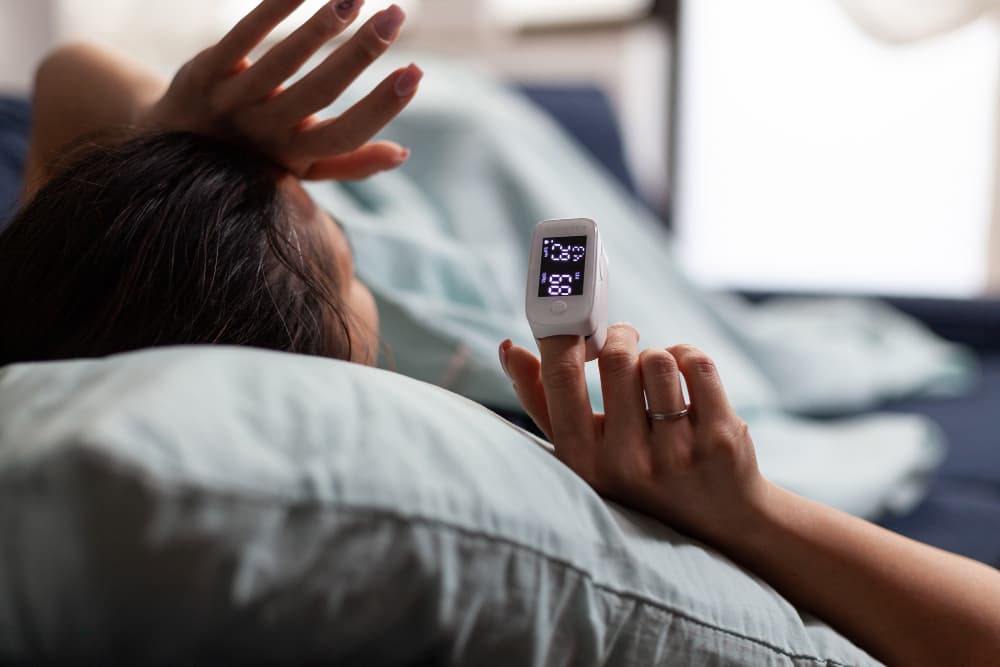
Most of us check our temperature when we feel sick. Almost no one checks their oxygen levels, until it becomes an emergency. Yet a quiet drop in blood oxygen can happen in someone with asthma, COPD, pneumonia, or even a lingering flu, long before they feel truly “unwell.” By the time breathlessness becomes obvious, oxygen saturation may have already fallen into a dangerous range.
That’s why a small, inexpensive device the pulse oximeter has become one of the most useful pieces of home healthcare equipment a family can own. It clips painlessly onto a fingertip, takes about ten seconds, and reveals two vital numbers: blood oxygen saturation (SpO2) and pulse rate. For people managing chronic respiratory or heart conditions, elderly parents living independently, or anyone recovering from a respiratory illness, that small reading can mean catching a problem early instead of ending up in an emergency room.
Here’s what healthy oxygen levels look like, seven warning signs that yours may be dropping, and why a reliable pulse oximeter belongs in every home.
What’s Normal, What’s Not
Oxygen saturation, or SpO2, measures how much of your blood’s oxygen-carrying capacity is actually in use. In healthy adults at sea level, normal readings fall between 95% and 100%. Readings of 90–94% are mildly low and worth monitoring closely; below 90% is generally a medical concern that calls for prompt attention, and readings in the 80s or lower can become an emergency. People with chronic lung conditions like COPD or sleep apnea sometimes run a slightly lower baseline, which is why knowing your own normal range matters more than chasing one “perfect” number.
7 Warning Signs Your Oxygen Levels May Be Low
1. Shortness of breath that doesn’t match your activity. Feeling winded after intense exercise is normal. Feeling winded folding laundry or sitting still is not — it’s a sign your body is struggling to get enough oxygen and working harder to compensate.
2. A bluish tint to lips, fingertips, or skin (cyanosis). When oxygen drops significantly, skin and mucous membranes can take on a faint blue or gray tinge, often around the lips and nail beds. This sign usually appears only once levels are already quite low, making it a late but serious warning. Seek care immediately if you notice it.
3. Rapid heart rate or palpitations. When oxygen delivery falls, the heart often beats faster to compensate. An unexplained jump in resting heart rate, especially with fatigue or breathlessness, is worth checking — which is also why a pulse oximeter’s dual heart-rate-and-SpO2 reading is so useful.
4. Persistent fatigue or unusual weakness. Oxygen fuels every cell, including muscles and the brain. A drop in levels can leave someone drained in a way rest doesn’t fix. This is often dismissed as “just tired,” especially in older adults, but it’s one of the most overlooked early signs.
5. Confusion or trouble concentrating. The brain is highly sensitive to oxygen levels. Mild hypoxia can show up as brain fog or slowed thinking, easily mistaken for stress or poor sleep. Because it’s subtle, caregivers of elderly or chronically ill relatives are often encouraged to track oxygen rather than rely on how someone “seems.”
6. Headaches, especially upon waking. Oxygen can dip during sleep, particularly with sleep apnea or chronic lung disease. A morning headache that fades through the day can signal an overnight drop, and is worth flagging to a doctor.
7. Restlessness, anxiety, or “air hunger.” Low oxygen can trigger a primal sense of not getting a full breath, which can look like restlessness or anxiety with no clear emotional trigger. Because it overlaps with ordinary anxiety, an objective oximeter reading removes the guesswork.
Why a Pulse Oximeter Belongs in Every Home
None of these signs are perfectly reliable alone — fatigue could be a bad night’s sleep; a headache could be dehydration. That’s the real risk: symptoms of low oxygen often look like everyday discomfort, letting people compensate for days or weeks without realizing something is wrong.
A pulse oximeter removes the guesswork with an objective number in seconds. It’s especially valuable for people managing asthma, COPD, or other chronic respiratory conditions who need to track trends over time; elderly parents living alone, where family can check in remotely with one simple number to discuss with a doctor; anyone recovering from pneumonia or a respiratory infection, where early detection of a drop can prevent a hospital readmission; and people with heart conditions, since oxygen and heart rate are closely linked.
Getting an Accurate Reading at Home
Accuracy depends on a few small details. Warm hands read better than cold ones, since cold reduces blood flow to the fingertip. Nail polish or acrylics can interfere with the sensor, so if a reading looks unusually low, try a different finger before assuming the worst. Sit still for about thirty seconds before trusting the final number.
If you get a reading below 90%, the right move isn’t to keep re-testing for a better number — it’s to seek medical attention, especially alongside any of the seven warning signs above.
When to See a Doctor Immediately
Seek urgent care for a sudden SpO2 drop below 90%, blue-tinged lips or fingertips, severe breathlessness at rest, confusion or fainting, or chest pain with a low reading. A pulse oximeter doesn’t replace a doctor’s evaluation — it gives you the objective information to know when that evaluation can’t wait.
Take Control of Your Oxygen Health Today
Low oxygen rarely announces itself loudly — it tends to whisper through tiredness, mild headaches, or breathlessness that’s easy to brush off. Recognizing these seven warning signs, paired with a reliable pulse oximeter, gives you a real safety net for yourself and the people you care for.
If you don’t already have one at home, now’s the time. Explore AffordPill’s range of accurate, affordable pulse oximeters and other home healthcare devices, and take a simple step toward catching problems early — before they become emergencies.
Frequently Asked Questions
1.
What is a normal oxygen level on a pulse oximeter?
Between
95% and 100% for most healthy adults at sea level. People with certain chronic
lung conditions may have a slightly lower personal baseline.
2.
What oxygen level is dangerously low?
Below
90% generally warrants prompt medical attention; the 80s or lower can be an
emergency. A low reading paired with breathlessness or confusion is more urgent
than an isolated number alone.
3.
Can a pulse oximeter give a wrong reading?
Yes,
cold fingers, nail polish, movement, and poor circulation can all affect
accuracy. Warm up, switch fingers, or remove polish, then re-test.
4.
Who should keep one at home?
Anyone
with asthma, COPD, sleep apnea, or heart disease; people recovering from
respiratory illness; caregivers of elderly parents; and households wanting
extra awareness during cold and flu season.
5.
Do I need a prescription to buy one?
No.
Pulse oximeters are widely available over the counter and online, making home
monitoring easy to start today.