
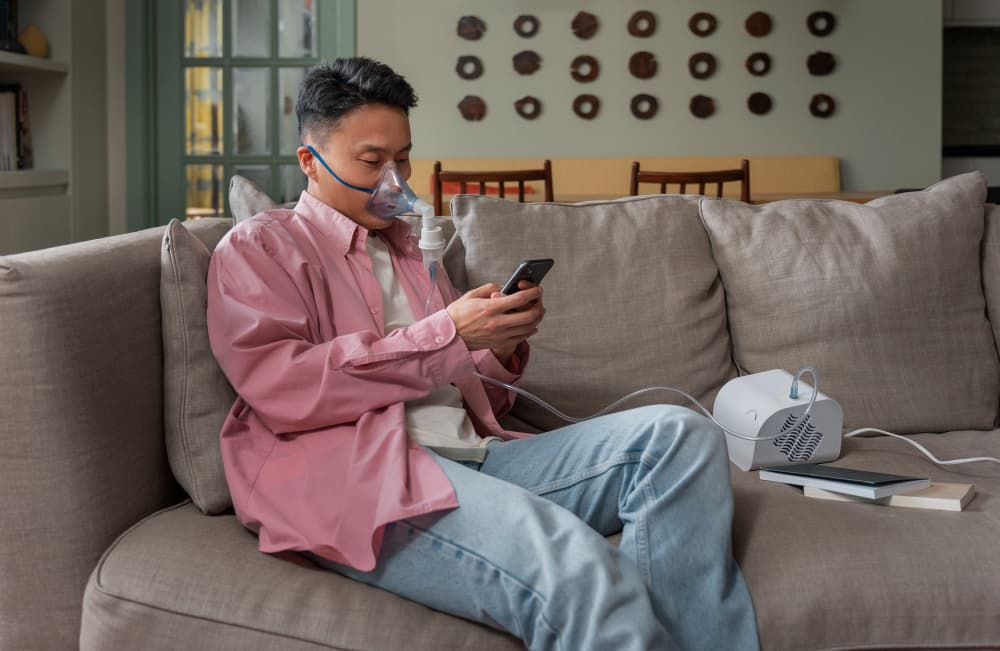
Every winter morning in Delhi, Mumbai, or Bengaluru, millions of asthma patients wake up to hazy skies and a familiar tightness in their chest. India is home to 15 of the world’s 20 most polluted cities, and for the estimated 37 million Indians living with asthma, every spike in PM2.5 or ozone levels can mean the difference between a routine day and a medical emergency. If you or a loved one relies on a nebulizer machine at home, understanding when and how, to use it in this polluted environment could literally save a life.
In this guide, we break down the relationship between urban air pollution and asthma attacks, explain the role of home nebulizers in respiratory care, and walk you through clear signals that tell you it’s time to reach for yours. We’ll also share how AffordPill makes it easy to buy a nebulizer online in India, without burning a hole in your pocket.
The Invisible Enemy: How Indian City Air Triggers Asthma
Air pollution in Indian cities is a complex cocktail of particulate matter (PM2.5, PM10), nitrogen dioxide, sulphur dioxide, ground-level ozone, and volatile organic compounds. For an asthma patient, these pollutants inflame bronchial airways, increase mucus production, and trigger the bronchospasm that causes an attack.
Key pollution triggers to watch in India’s urban environment:
· Crop-burning season (October–November): Smoke from stubble burning in Punjab and Haryana blankets the Indo-Gangetic Plain, pushing AQI beyond 400 in Delhi-NCR.
· Vehicle exhaust & construction dust: Diesel particulates and fine road dust keep daily PM2.5 levels 5–8x above WHO safe limits in cities like Kolkata and Lucknow.
· Indoor pollutants: Biomass cooking, incense sticks, and monsoon mould can be just as dangerous — and are often overlooked.
· Weather inversions: Cold winter nights trap pollutants near ground level, making early mornings especially risky for asthma patients.
When AQI crosses 150 (Unhealthy category), studies show emergency room visits for respiratory illness in Indian cities rise by 20–40%. Knowing this helps you stay one step ahead.
What Is a Home Nebulizer and How Does It Help?
A nebulizer machine converts liquid medication — typically bronchodilators like Salbutamol or corticosteroids — into a fine mist that can be inhaled directly into the lungs. Unlike a metered-dose inhaler (MDI), which demands precise technique, a nebulizer delivers medication passively. This makes it especially valuable for:
· Children and elderly patients who struggle to coordinate inhaler puffs
· Severe or moderate acute attacks where higher doses are needed
· Patients with multiple comorbidities such as COPD or chronic bronchitis
· Situations where a standard inhaler provides insufficient relief
Modern compressor nebulizers available in India are compact, affordable, and easy to use without medical supervision once you’ve been trained by your doctor. If you want to buy a nebulizer online, AffordPill’s healthcare devices section offers genuine, certified devices at prices up to 90% lower than retail.
5 Clear Signals It’s Time to Use Your Home Nebulizer
Always follow your doctor’s asthma action plan. However, the following situations are generally accepted clinical indicators for nebulizer use at home:
1. Your rescue inhaler is not working after 2–3 puffs
If symptoms persist 15–20 minutes after using your standard bronchodilator MDI, a nebulized dose may deliver the deeper bronchodilation needed to open airways.
2. Peak flow reading drops below 50% of your personal best
Patients using a peak flow meter who record readings below 50% are in a moderate-to-severe attack zone, a strong clinical indicator for nebulization.
3. AQI crosses 200 and you have early symptoms
Chest tightness, mild wheezing, or increased cough on high-pollution days (especially during crop-burning season) justifies a prophylactic nebulization session if prescribed by your doctor.
4. The child or elderly patient cannot use an inhaler effectively
Poor inhaler technique drastically reduces drug delivery to the lungs. A nebulizer bypasses this problem entirely, making it the preferred option for vulnerable age groups.
5. Night-time or early morning attacks
Asthma naturally worsens in the early hours due to circadian cortisol dips. Combined with pollution inversions common in Indian cities, this window carries the highest risk for an acute episode.
How to Use a Nebulizer Safely at Home: Quick Checklist
1. Wash hands thoroughly before handling the nebulizer kit.
2. Fill the medication cup with the prescribed dose (usually 2.5 ml of Salbutamol diluted with normal saline).
3. Attach the mouthpiece or face mask — always use a mouthpiece for children over 5.
4. Sit upright or slightly forward to maximise lung expansion.
5. Breathe slowly and deeply through the mouth for 10–15 minutes until the medication cup is empty.
6. Clean and air-dry all parts after every use to prevent bacterial contamination.
7. If symptoms do not improve within 20 minutes, seek immediate medical help — do not repeat the dose without medical advice.
Important: A home nebulizer is a supportive device, not a substitute for a doctor. Always have a written asthma action plan prepared with your pulmonologist.
Choosing the Right Nebulizer: What to Look For
When you decide to buy a nebulizer online in India, the options can be overwhelming. Here’s a quick comparison of the two main types:
|
Feature |
Compressor (Jet) Nebulizer |
Mesh Nebulizer |
|
Cost |
₹800–3,000 |
₹3,000–10,000+ |
|
Noise |
Moderate |
Very quiet |
|
Particle size |
2–5 microns |
1–5 microns (adjustable) |
|
Best for |
Home use, regular asthma |
Travel, infants, elderly |
|
Maintenance |
Easy |
Moderate (mesh cleaning) |
For most Indian households managing chronic asthma, a reliable compressor nebulizer is the most cost-effective choice. AffordPill stocks top brands with doorstep delivery across India — the same quality at a fraction of the price you’d pay at a local pharmacy.
Protecting Yourself from Air Pollution: Complementary Steps
A nebulizer treats an acute attack, but prevention matters equally. Combine your respiratory care routine with these protective habits:
· Monitor AQI daily using apps like Sameer (CPCB) or IQAir.
· Stay indoors during peak pollution hours (6–9 AM and 7–10 PM).
· Use N95 masks on high-AQI days if outdoor activity is unavoidable.
· Invest in a HEPA air purifier for bedrooms, especially in Delhi, Mumbai, and Kanpur.
· Keep your inhalers, peak flow meter, and nebulizer stocked and within easy reach — especially October through February.
Take Control of Your Respiratory Health Today
Living with asthma in an Indian city is challenging — but it doesn’t have to control your life. Equipping your home with a reliable nebulizer machine, stocking up on prescribed medications, and staying informed about air quality are the three pillars of smart asthma self-management.
AffordPill makes this easier than ever. With prices up to 90% off on prescription medicines, medical devices, and respiratory care products, you can build a complete home asthma care kit without overspending. Free shipping above ₹399, fast delivery across India, and 100% genuine products — that’s the AffordPill promise.
Frequently Asked Questions (FAQs)
Q1. Can I use a nebulizer every day for asthma management?
Daily nebulizer use should only happen under medical supervision. Most patients use it on an as-needed basis during attacks or high-pollution days, not as regular maintenance therapy. Long-term, your doctor will typically prescribe an inhaled corticosteroid (ICS) as daily preventive medication.
Q2. What medicine goes into a nebulizer for asthma?
The most common medications are Salbutamol (Albuterol) for quick bronchodilation and Ipratropium bromide for more severe episodes. Some patients are prescribed nebulized Budesonide. Never use any medication in your nebulizer without a doctor’s prescription.
Q3. How do I know if my asthma attack is serious enough for the ER?
Go to the emergency room if: (a) your nebulizer gives no relief after one treatment, (b) you cannot speak in full sentences, (c) your lips or fingernails turn bluish, or (d) your peak flow is below 33% of your personal best. These are signs of a life-threatening attack.
Q4. Is it safe to buy a nebulizer online in India?
Yes, provided you purchase from a trusted, certified platform. AffordPill lists only ISI/CE-certified medical devices and delivers them with proper packaging. Always check for BIS certification and warranty before purchasing any respiratory care device.
Q5. How often should I clean my nebulizer?
After every single use, rinse the medication cup, mouthpiece, and mask with warm water and air-dry. Disinfect all reusable parts at least once a week using the manufacturer’s recommended solution. Never share nebulizer parts between patients.
Q6. Can children use a home nebulizer safely?
Yes, with paediatric masks and correct medication doses prescribed by a doctor. Children under 5 should always use a face mask rather than a mouthpiece. A sitting or semi-reclined position during treatment helps maximise drug delivery to the lungs.